

Why weight creeps up with age, and 6 ways to manage it

Many people find they eat the same but slowly gain weight as they get older. There are clear reasons for this, and many of them can be changed.
This article draws on Mayo Clinic, a review of muscle changes with age, and protein guidance for older adults.
1. Why weight tends to rise with age
- Muscle tends to decrease with age while the share of fat rises, so the body uses less energy at rest.
- Many people move less day to day, which is the part of energy use that is largest and easiest to change.
- Eating habits often stay the same or increase, such as eating out more, even though the body needs less energy.
Reference: [1] Mayo Clinic (metabolism)
2. Age-related muscle loss can be addressed
The loss of muscle mass, strength and function with age is called sarcopenia. It has several causes, including hormones, diet and inactivity. Reviews find that both resistance and aerobic exercise, along with dietary changes, can help muscle.
Reference: [2] Volpi 2004
3. 6 ways to manage it
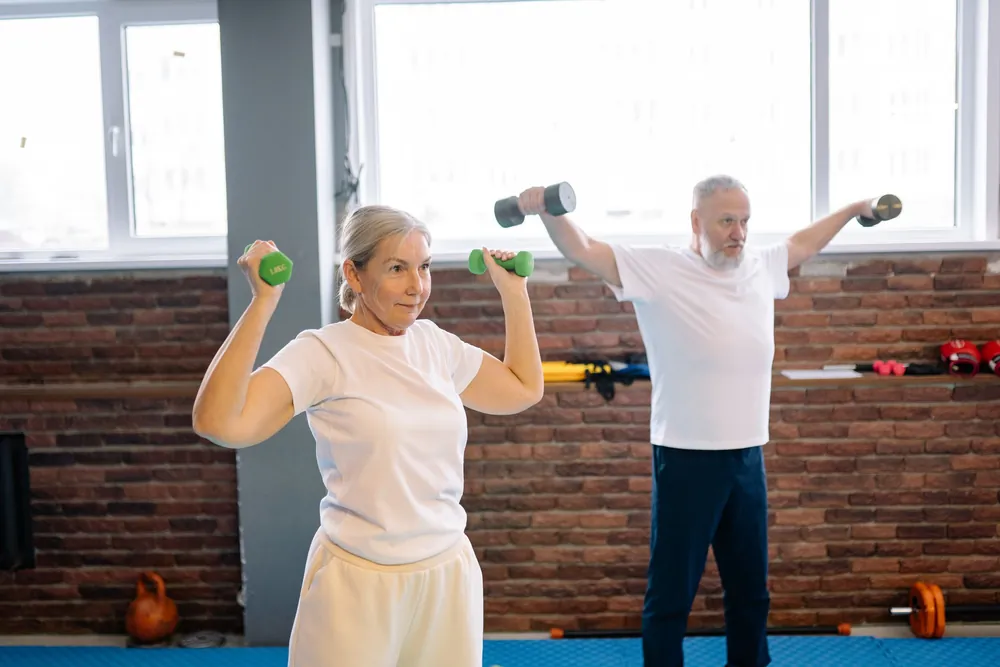
- Don't assume weight gain is inevitable; it's never too late to start
- Train the major muscle groups at least 2 days a week
- Do at least 150 minutes of moderate aerobic activity a week and move more during the day
- Eat vegetables, whole fruit and high-fibre foods, which fill you up with fewer calories
- Include protein at every meal; adults over 65 are advised an average of at least 1.0–1.2 g per kg of body weight a day
- Write down what you eat, your exercise and your water to see the picture and stay motivated
Reference: [1] Mayo Clinic (metabolism) · [3] PROT-AGE 2013 · [4] Mayo Clinic (fitness)
4. When to see a doctor
If you gain weight quickly for no clear reason or have other symptoms, see a doctor, as some conditions such as an underactive thyroid can cause weight gain, though they are uncommon.
Reference: [1] Mayo Clinic (metabolism)
Read next: Protein 101: what it is, how much you need and the best sources ›
Read next: How much protein per meal? Spreading it across meals and snacks ›
Read next: Getting older? 9 everyday tips on what to eat and how to live ›
Read next: Balanced nutrition: how much protein, carbohydrate and fat? ›
This article is general information, not medical advice. If you have a medical condition, are pregnant or take medication, talk to a doctor or dietitian before changing your diet or exercise.
References
- Mayo Clinic: Metabolism and weight loss: How you burn calories (21 Jan 2026 · checked 15 Oct 2026) ↗ (opens in a new tab)
- Volpi E, et al. Muscle tissue changes with aging. Curr Opin Clin Nutr Metab Care. 2004 ↗ (opens in a new tab)
- Bauer J, et al. Evidence-based recommendations for optimal dietary protein intake in older people (PROT-AGE). J Am Med Dir Assoc. 2013 ↗ (opens in a new tab)
- Mayo Clinic: Fitness program: 5 steps to get started (5 Dec 2023 · checked 15 Oct 2026) ↗ (opens in a new tab)
Image credits
- Cover image: Hyukman Kwon / Pexels ↗ (opens in a new tab) · licence Pexels License ↗ (opens in a new tab)
- Image in section 3: Yan Krukau / Pexels ↗ (opens in a new tab) · licence Pexels License ↗ (opens in a new tab)
Compiled by Well Nutrition Hub from the sources listed at the end of this article. Copyright in the referenced content, images and media belongs to the respective rights holders. You are welcome to share the link to this article.